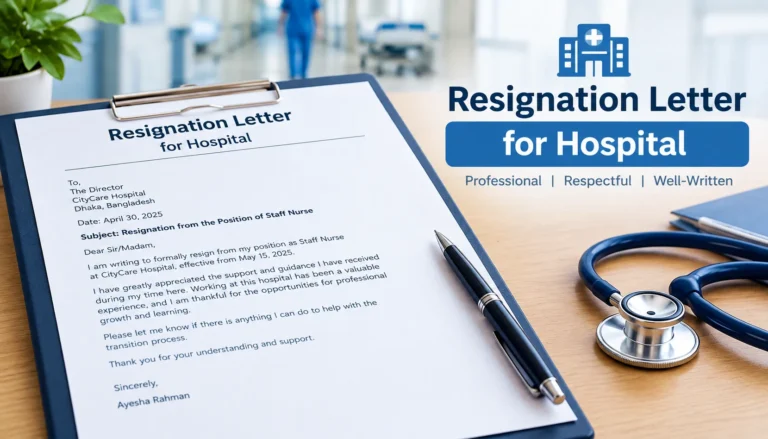

A resign letter is the short written note that tells your employer you are leaving the job. It names your position, gives your last working day and, if you want, says thanks. Most take under five minutes to write, and they run about 100 to 200 words.
People tend to treat it as a formality. It isn’t. HR files it. Payroll often needs it before releasing your final salary. A future employer may see it during a reference check. So it’s worth getting right once and moving on.
This page covers what a resign letter should include, the main types, a ready-to-use sample, and the mistakes that cause trouble. If you need something more specific, the links below take you to detailed guides.
What Is a Resign Letter?
A resign letter (also called a resignation letter) is a formal document that confirms you are ending your employment. You address it to your manager or HR, date it, and keep it brief.
Think of it as a receipt for your decision. It shows when you told the company, which sets your notice period, and it fixes your last day on paper so nobody can argue about it later.
You don’t have to explain why you’re leaving. A single line such as “for personal reasons” is enough, and many people skip the reason entirely.
Why You Should Always Put Your Resignation in Writing
Telling your boss in person is good manners. It just isn’t proof. Here is what a written resign letter does that a conversation can’t:
- It starts your notice period officially.
- It records your last working day, so there is no confusion at settlement time.
- It helps you get your experience letter, relieving letter and final dues.
- It leaves a calm, professional impression, even if the job was hard.
Many companies simply won’t process your exit until they have the letter on file.
What to Include in a Resign Letter
Every good resign letter covers the same five things. Skip any one and HR will probably email you back.
- A clear statement that you are resigning: Say it in the first sentence.
- Your job title and company name.
- Your last working day. Count it from your notice period.
- A short thank-you. Optional, but it costs you nothing.
- An offer to help with handover. One sentence is plenty.
If you want the full walkthrough with wording for each step, read our guide on how to write a resignation letter.
Resign Letter Format at a Glance
The layout is simple and rarely changes. Here is the structure most employers expect:
| Section | What to Write | Length |
| Date and address | Today’s date, manager’s name, company name | 2 to 3 lines |
| Subject line | “Resignation: [Your Name]” | 1 line |
| Greeting | “Dear [Manager’s Name],” | 1 line |
| Opening | You are resigning from your role, with your job title | 1 to 2 sentences |
| Last working day | The exact date based on your notice period | 1 sentence |
| Thanks (optional) | A brief note of appreciation | 1 to 2 sentences |
| Handover offer | Willingness to help with the transition | 1 sentence |
| Sign-off | “Sincerely,” plus your name and signature | 2 to 3 lines |
For a deeper look, including templates you can copy, see the complete resignation letter format guide.
Types of Resign Letters
The structure stays the same, but the wording shifts depending on your situation.
| Type | Best For | What Changes |
| Standard letter | Leaving on good terms | Neutral tone, normal notice period |
| Two weeks’ notice letter | Many private-sector jobs | States the two-week timeline up front |
| Immediate resignation | Emergencies or contract exits | Says you are leaving now, may mention a buyout |
| Email resignation | Remote or hybrid teams | Shorter, sent as an email |
| Retirement letter | Retiring after a long career | Mentions retirement date and years of service |
| Personal reasons letter | Health, family or relocation | Keeps the reason general |
| One-line resignation | Very informal workplaces | Only the resignation and the last date |
Leaving for family, health or relocation reasons? Our personal reason resignation letter format page shows how to say just enough without over-explaining.
Resign Letters in Other Languages
Not every workplace runs in English. If your manager or HR team prefers another language, a letter in their language can show real respect.
- Writing for a Hindi-speaking workplace? Use our resignation letter in Hindi samples and format.
- Working in Karnataka? Try the Kannada resignation letter guide.
- Employed in South Korea? The Korean letter of resignation (사직서) page explains the local format and etiquette.
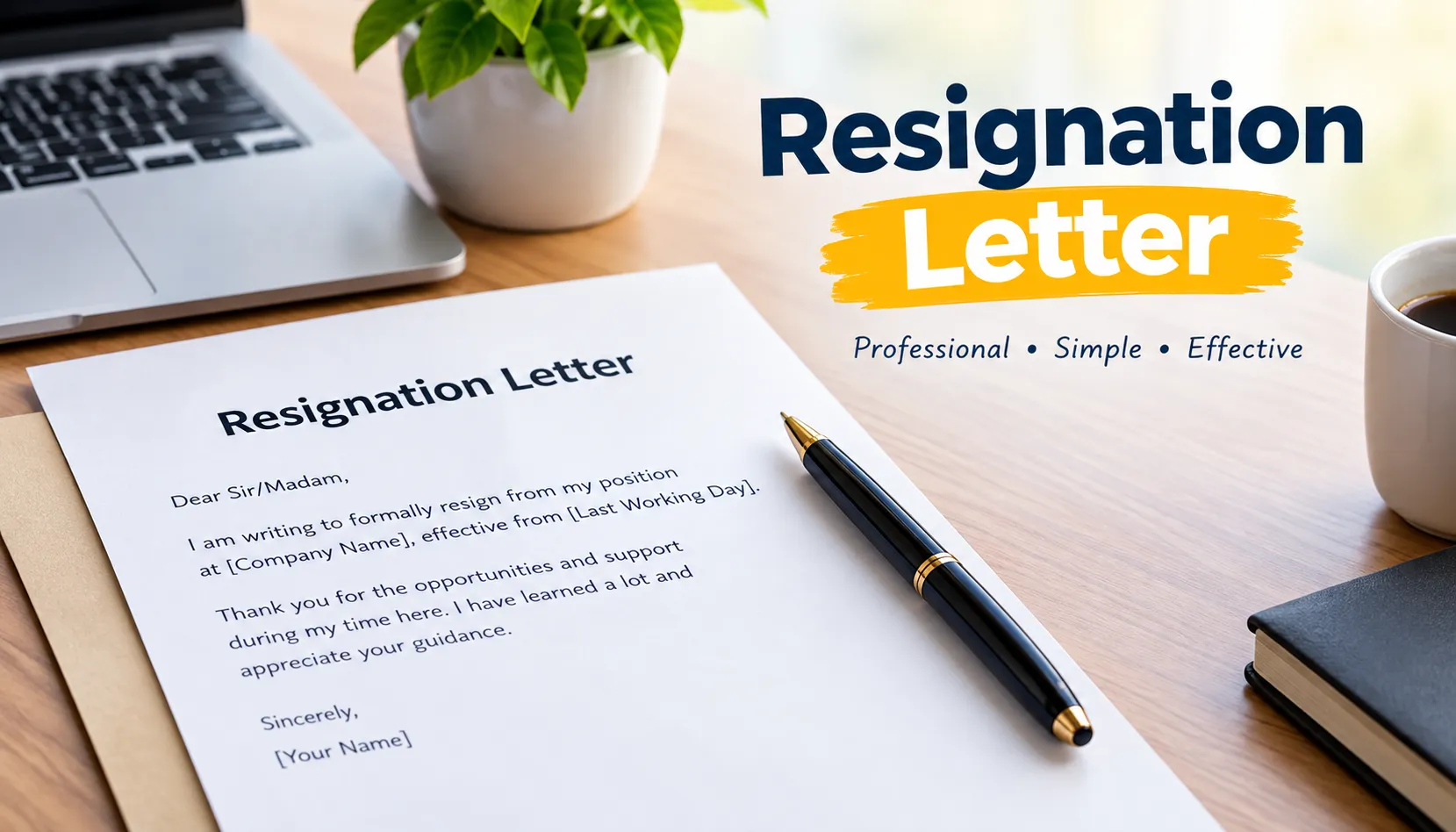
A Simple Resign Letter Sample
Here is a short version you can adapt right now.
Dear [Manager’s Name],
I am writing to formally resign from my position as [Job Title] at [Company Name]. My last working day will be [Date], in line with my [notice period] notice.
Thank you for the opportunities and support I’ve had during my time here. I’m happy to help with handover so the transition goes smoothly.
Sincerely,
[Your Name]
Change the details, match the tone to your workplace, and it’s ready. More ready-made options are in our free resignation letter templates and resignation letter examples.
Typical Notice Periods
Your contract always wins, but this table gives a rough idea of what to expect.
| Role Level | Common Notice Period | Notes |
| Entry-level | 15 to 30 days | Sometimes negotiable |
| Mid-level | 30 days | Standard in most private companies |
| Senior or manager | 30 to 60 days | Longer handover expected |
| Executive | 60 to 90 days | Clients or boards may need notice |
| Government job | 30 to 90 days | Depends on service rules |
| Probation | 1 to 15 days | Check your offer letter |
If you can’t serve the full notice, talk to HR before you hand in the letter. The letter itself is not the place to bargain.
Mistakes That Ruin a Resign Letter
Most problems come from the same few slips:
- Venting: Save complaints for the exit interview, or keep them to yourself.
- Leaving out the last working day: It’s the most important line, and the one people forget.
- Writing a long explanation: One line is enough.
- Ignoring your contract: Check the notice clause before you pick a date.
- Not keeping a copy: Hold on to a signed copy or the sent email.
- Being too casual: Even friendly offices expect a professional tone here.
Frequently Asked Questions
- Do I have to give a reason in my resign letter?
No. You can write “for personal reasons” or leave the reason out. A short, polite letter is perfectly acceptable. - How much notice should I give?
Check your offer letter or contract first. Most companies ask for 15 to 30 days, though senior roles can require 60 or 90 days. - Can I send my resign letter by email?
Yes. Most employers accept it, especially for remote or hybrid roles. Include the same details as a printed letter: your intent to resign, your last working day and your name. - Should I mention my new job?
It isn’t necessary, and it usually isn’t a good idea. Keep the letter about leaving your current role. - What if I don’t want to say thank you?
You don’t have to. A brief, genuine line helps with future references, but if it feels fake, leave it out. - What’s the difference between a resignation letter and a relieving letter?
You write the resignation letter to tell your employer you’re leaving. The company issues the relieving letter afterward to confirm your last day and that you’ve been released from duty. - How long should a resign letter be?
Between 100 and 200 words is plenty. Short and clear beats long and detailed.
Conclusion
A good resign letter is short, polite and specific. State that you’re leaving, give your last working day, add a line of thanks if you mean it, and sign off. That’s all HR needs to process your exit, and it keeps your reputation intact.
Start with the sample above, then pick the guide that fits your situation: how to write a resignation letter, the resignation letter format, or the personal reason resignation letter format. You can also browse all resignation letters in one place.