
If you’re wondering how to write a resignation letter, the short answer is this: state that you’re leaving, give your last working day, say thanks if you mean it, and sign off politely. That’s the whole job. Most good letters take about five minutes and run 100 to 200 words.
The hard part is usually not the writing. It’s knowing what to leave out. You don’t need to explain your reasons, defend your decision, or list what went wrong. This guide walks through what to include, how to format it, and which mistakes cause the most trouble later.
What Is a Resignation Letter?
A resignation letter is a short written notice telling your employer that you’re ending your employment. You address it to your manager or HR, add the date, and keep the tone neutral.
It also does real work. HR keeps it on file, and many companies won’t release your final salary, leave encashment or relieving letter without it. If a future employer ever runs a reference check, this letter is part of the record. A few careless lines can follow you around longer than you’d expect.
Not sure which version fits your situation? Browse our resignation letters collection to see how different cases are handled.
Why You Should Resign in Writing
A quick chat with your manager feels friendlier, and you should still have it. But the written letter matters because:
- It fixes your last working day: Verbal agreements get remembered differently by different people.
- It starts your notice period: The clock usually begins from the date on your letter.
- It protects your record: HR files, experience letters and settlement calculations all rely on it.
- It leaves a better impression: A calm, brief letter is what people remember, not the awkward conversation before it.
How to Write a Resignation Letter: 6 Steps
- Say you’re resigning in the first line: Don’t bury it. “I am writing to resign from my position as [Job Title]” does the job.
- Add your last working day: Count from your notice period and write the exact date. This is the detail people forget most.
- Thank them, only if you mean it: One honest sentence is enough. If you can’t write one honestly, skip it.
- Offer help with the handover: A line about wrapping up pending work shows you’re leaving responsibly.
- Keep the reason short or leave it out: “For personal reasons” is perfectly acceptable. Our guide to the personal reason resignation letter format shows how to word it without over-sharing.
- Close formally and sign: Add your name, designation and employee ID if your company uses one.
Resignation Letter Format
Most letters follow the same layout, whether you work in a private company, a school or a government office.
| Section | What to Write | Length |
| Date and address | Today’s date, manager’s name, company name | 2-3 lines |
| Subject line | “Resignation: [Your Name]” | 1 line |
| Salutation | “Dear [Manager’s Name],” | 1 line |
| Opening | Clear statement that you are resigning | 1-2 sentences |
| Last working day | Exact date based on your notice period | 1 sentence |
| Thanks (optional) | A short, honest thank-you | 1-2 sentences |
| Handover offer | Willingness to help with the transition | 1 sentence |
| Closing | “Sincerely,” plus name and signature | 2-3 lines |
If you’d rather start from a ready-made layout, our free templates are easy to copy and edit.
A Short Sample Resignation Letter
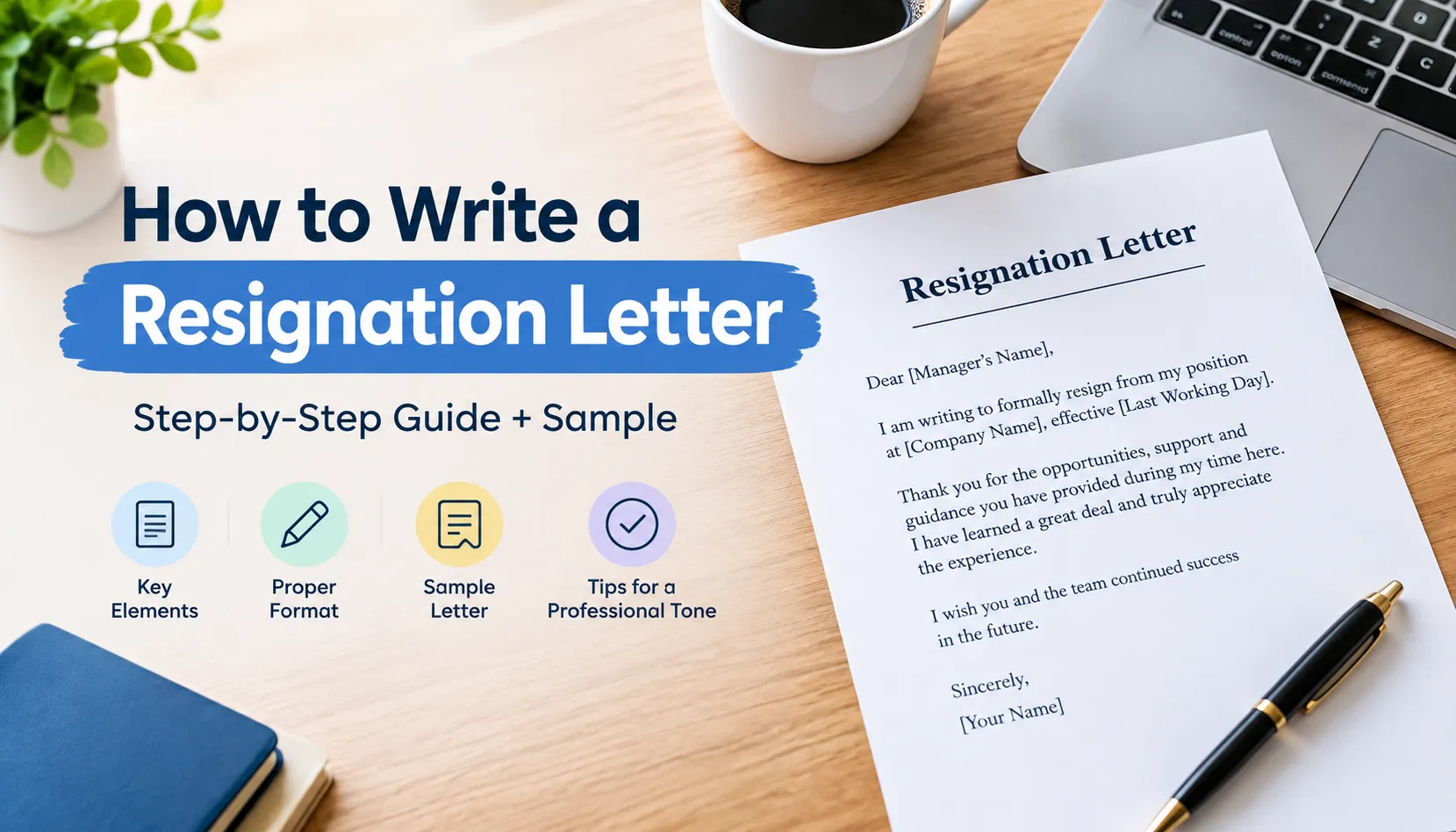
Dear [Manager’s Name],
I am writing to formally resign from my position as [Job Title] at [Company Name]. My last working day will be [Date], in line with my [notice period] notice.
Thank you for the opportunities and support I’ve had during my time here. I’m happy to help with the handover so the transition goes smoothly.
Sincerely,
[Your Name]
Swap in your details and adjust the tone to suit your workplace. If you want to see how others have worded theirs, our resignation letter examples cover a range of roles and situations.
Types of Resignation Letters
The structure stays the same, but the wording shifts depending on why and how you’re leaving.
| Type | Best For | What Changes |
| Standard letter | Leaving on good terms | Neutral tone, normal notice |
| Two weeks’ notice | Roles with a short notice norm | States the two-week timeline upfront |
| Immediate resignation | Emergencies or contract exits | Mentions immediate departure or buyout |
| Email resignation | Remote or hybrid teams | Shorter, sent as an email body |
| Personal reasons | Health, family or relocation | Keeps the reason general |
| Retirement letter | Ending a career | Mentions retirement date and years of service |
| Regional language letter | Local-language workplaces | Written in the local language |
Working in Karnataka or writing to a Kannada-speaking manager? Here’s a full walkthrough of the Kannada resignation letter with format and samples.
Notice Period: How Much Should You Give?
Your contract decides this, not a general rule. Use the figures below only as a rough guide.
| Role Level | Typical Notice |
| Entry-level | 15-30 days |
| Mid-level | 30 days |
| Senior or managerial | 30-60 days |
| Leadership | 60-90 days |
| Probation period | 1-15 days |
If you can’t serve the full period, talk to HR before you hand in the letter. The letter itself isn’t the place to negotiate.
Common Mistakes to Avoid
- Venting: Even if you’re leaving a bad situation, keep the letter calm. The exit interview is the place for honest feedback.
- Leaving out the last working day: HR can’t process your exit without it.
- Over-explaining: One line of reasoning is plenty. A full paragraph invites questions.
- Skipping your contract: Check the notice clause first. A wrong date can cause payroll trouble.
- Not keeping a copy: Save a signed copy or the sent email for your own records.
- Being too casual: Even in a relaxed office, keep the letter professional.
Frequently Asked Questions
- Do I have to give a reason in my resignation letter?
No. You can say you’re leaving for personal reasons or give no reason at all. - How long should a resignation letter be?
Between 100 and 200 words is enough. Short and clear works better than long and detailed. - Can I resign by email?
Yes, most companies accept it, especially for remote roles. Include the same details as a printed letter: your intent, your last working day and your name. - Who should I address the letter to?
Your direct manager, with HR copied in. If your company has a set process, follow that. - Should I mention my new job?
It isn’t necessary, and it’s usually better not to. Keep the letter focused on your departure. - What if I want to leave sooner than my notice period?
Speak to HR about early release or a buyout before you submit the letter. - What’s the difference between a resignation letter and a relieving letter?
You submit the resignation letter to tell your employer you’re leaving. The company gives you the relieving letter afterward to confirm you’ve been formally released.
Have a question we haven’t covered? Reach out through our contact page, or read more about who we are on the about page. You can also find more guides on our blog.
Conclusion
Knowing how to write a resignation letter comes down to a few basics: a clear opening line, the right last working day, a polite tone and a clean sign-off. You don’t need fancy wording, and you don’t need to explain yourself. Check your notice period, keep a copy, and send it with confidence.
Use the sample and format above as your starting point, then head to our free templates if you want a version built for your exact situation.