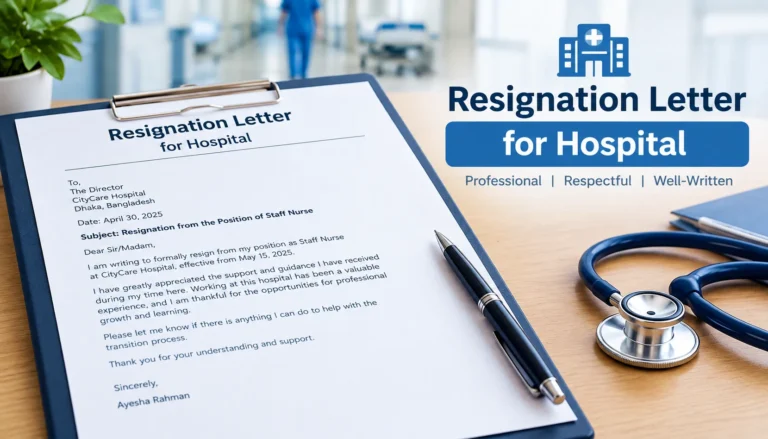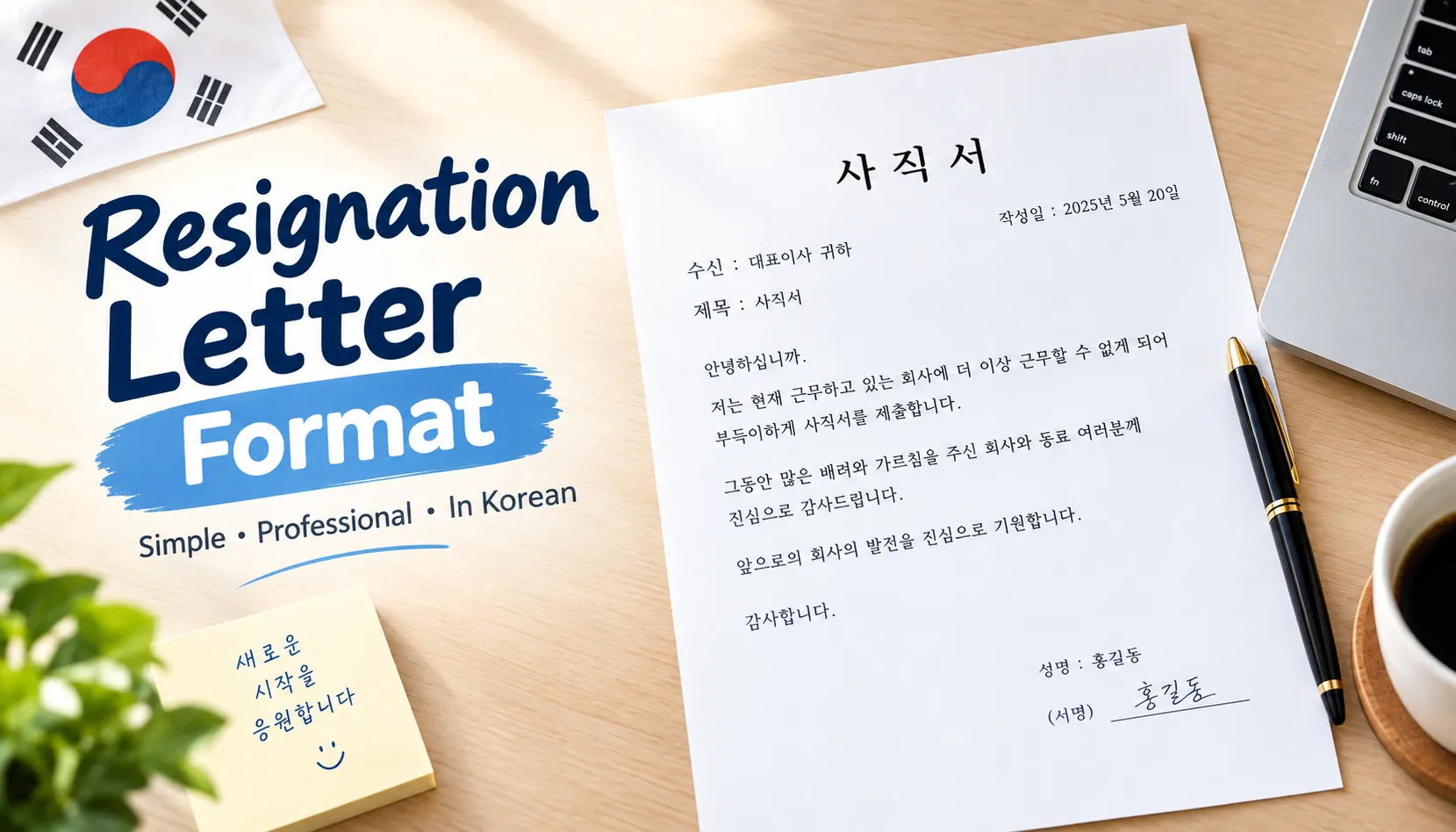

The right resignation letter format keeps your exit clean, protects your references and gives HR everything needed to process your final settlement. It also takes about five minutes to write once you know the structure.
This guide walks through the standard layout, a copy-ready sample, an email version and the mistakes that cause trouble. If you’re leaving for a private reason and want a softer approach, see our guide on the personal reason resignation letter format.
What Is a Resignation Letter Format?
A resignation letter format is the standard structure you follow when telling your employer in writing that you’re leaving. It’s short, formal and usually addressed to your manager or HR. Most letters run 100 to 200 words.
Companies use the letter to start your notice period, record your last working day and release your dues. So the format matters more than the wording. Get the structure right and even a plain letter does its job.
Standard Resignation Letter Format (At a Glance)
Every good letter contains the same building blocks, in the same order.
| Section | What to Write | Length |
| Date and address | Today’s date, manager’s name, designation, company | 2-3 lines |
| Subject line | “Resignation – [Your Name], [Designation]” | 1 line |
| Salutation | “Dear [Manager’s Name],” | 1 line |
| Opening statement | State clearly that you are resigning from your role | 1-2 sentences |
| Last working day | Exact date based on your notice period | 1 sentence |
| Thank-you note | Brief appreciation for the opportunity (optional) | 1-2 sentences |
| Handover offer | Willingness to help with the transition | 1 sentence |
| Closing | “Sincerely,” plus your full name, designation and signature | 2-3 lines |
How to Write a Resignation Letter, Step by Step
- Open with your decision: Say you are resigning in the very first line. Don’t make your manager hunt for it.
- Add your last working day: Count from the date you submit the letter, using the notice period in your contract.
- Say thanks, briefly: One honest sentence is enough. If you can’t write one sincerely, leave it out.
- Offer a handover: A single line about wrapping up pending work shows professionalism.
- Skip the long reason: “For personal reasons” is perfectly acceptable, or you can give no reason at all.
- Sign off formally: Add your name, designation and employee ID if your company uses one.
Sample Resignation Letter
You can copy this and fill in the brackets.
Subject: Resignation – [Your Name], [Job Title]
Dear [Manager’s Name],
I am writing to formally resign from my position as [Job Title] at [Company Name]. My last working day will be [Date], in line with my [30-day] notice period.
Thank you for the opportunities and support I’ve received during my time here. I will complete my pending tasks and help hand over my responsibilities so the transition is smooth.
Please let me know if you need anything further from me.
Sincerely,
[Your Full Name]
[Employee ID, if applicable]
Want more ready-made wording? Browse our free resignation letter templates and pick one that fits your workplace.
Resignation Letter Format for Email
Many companies now accept resignation by email, especially for remote and hybrid roles. The structure stays the same, only the packaging changes.
- Subject line: Resignation – [Your Name]
- Body: Use the same short letter as above, with no extra header block
- Attachment (optional): A signed PDF, if HR asks for one
- Copy: Add your manager and HR in the same email, and keep a sent copy for yourself
Resignation Letter Formats for Different Situations
The base format never changes, but the details do. Here’s how to adjust it.
| Situation | What to Change |
| Standard resignation | Neutral tone, full notice period |
| Two weeks’ notice | State the two-week timeline in the opening line |
| Immediate resignation | Say the departure is immediate and mention any buyout or contract clause |
| Personal reasons | Keep the reason general and skip the details |
| Retirement | Mention your retirement date and years of service |
| Regional language | Write in the language your manager reads most comfortably |
If you’re working in Karnataka or writing to a Kannada-speaking team, our Kannada resignation letter guide includes format and sample wording. You can also see more real-world layouts in our resignation letter examples.
How Much Notice Should You Give?
Your contract always overrides general rules, but this table shows what’s typical.
| Role Level | Typical Notice Period |
| Entry-level | 15-30 days |
| Mid-level | 30 days |
| Senior or managerial | 30-60 days |
| Leadership or executive | 60-90 days |
| Government or public sector | 30-90 days |
| Probation period | 1-15 days |
Check your offer letter before you write the date. A wrong last working day can delay your relieving letter and final payment.
Common Mistakes to Avoid
- Leaving out the last working day: It’s the most important line in the letter.
- Venting frustration: Use the exit interview for feedback, not the letter.
- Writing a long explanation: One line covers it.
- Ignoring your notice period: Read your contract before submitting.
- Keeping no copy: Save a signed copy or a sent-email record.
- Sounding too casual: Stay professional, even in a relaxed workplace.
For more guidance across all types, visit our main resignation letters section.
Frequently Asked Questions
- What is the correct format of a resignation letter?
Start with the date and the recipient’s details, add a subject line and greeting, then state that you’re resigning and give your last working day. Finish with a short thank-you, a handover offer and a formal sign-off. - How long should a resignation letter be?
Between 100 and 200 words. Anything longer usually adds risk without adding value. - Do I need to give a reason for resigning?
No. You can say “for personal reasons” or leave the reason out completely. - Can I send my resignation letter by email?
Yes, most companies accept it. Include the same details as a printed letter and keep a copy of the sent message. - Should I print and sign the letter?
If your company asks for a hard copy, yes. Otherwise, email is usually enough. When in doubt, ask HR which they prefer. - What is the difference between a resignation letter and a relieving letter?
You submit the resignation letter to announce your exit. The company issues the relieving letter afterward to confirm your release. - Can I withdraw my resignation after submitting it?
It depends on your employer. Some accept a withdrawal before the notice period ends, but they aren’t required to, so speak to HR quickly if you change your mind.
Conclusion
A strong resignation letter is simple: a clear statement, an accurate last working day and a professional tone. Follow the format above, adjust the details for your situation and you’ll have a letter ready in minutes.
Start with the free templates, check your notice period, and send your letter with confidence. For more help, head back to the Resignation Letter homepage.